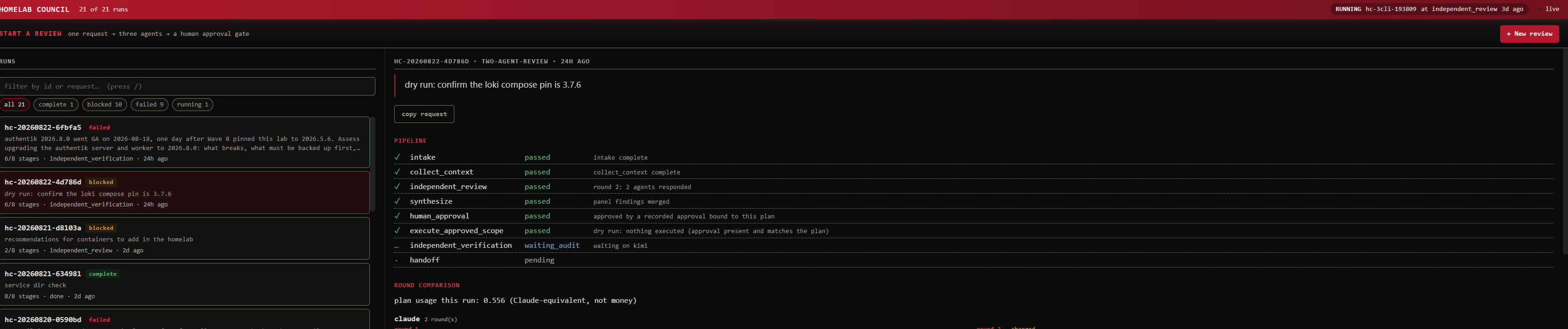
The council dashboard showing a run's pipeline, all stages passed through the approval gate

The Council Gets a Front Door

The council worked. One request went to Claude, Codex and Kimi, they answered independently, and nothing touched the lab without a human approval bound to a hash of the exact plan. It also lived entirely in a terminal, which meant that to approve a run I had to type a run id like hc-20260822-6fbfa5 and then re-type the original 350-character request verbatim, because resume rebuilds the context pack from it. Get one character wrong and you have quietly changed the inputs the agents were judged on. ...
23 August 2026 · 7 min
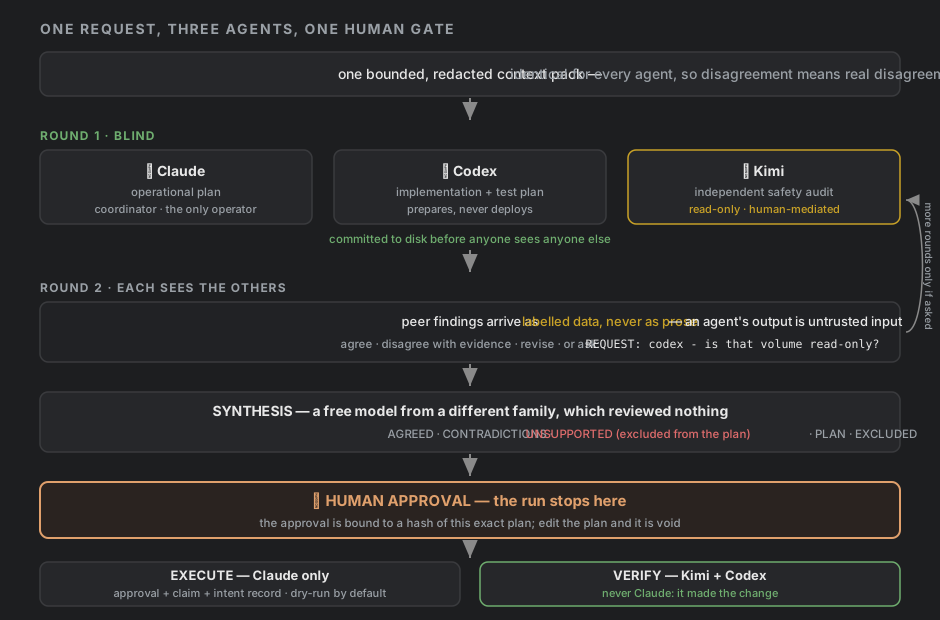
Pipeline diagram: one context pack fans out to Claude, Codex and Kimi in a blind first round, then a peer round, then a free model synthesises, then a human approval gate, then execute and verify

Three Agents, One Approval Gate — Making Claude, Codex and Kimi Review Each Other

I have three coding agents with access to this lab. Claude Code does most of the building. Codex reviews and runs the scans. Kimi audits. Until this week they had never exchanged a word — each got its own context, its own session, and its own chance to be confidently wrong with nobody checking. So I built a thing that makes them work one request together, and put a human approval gate in front of anything that changes the lab. ...

19 August 2026 · 11 min
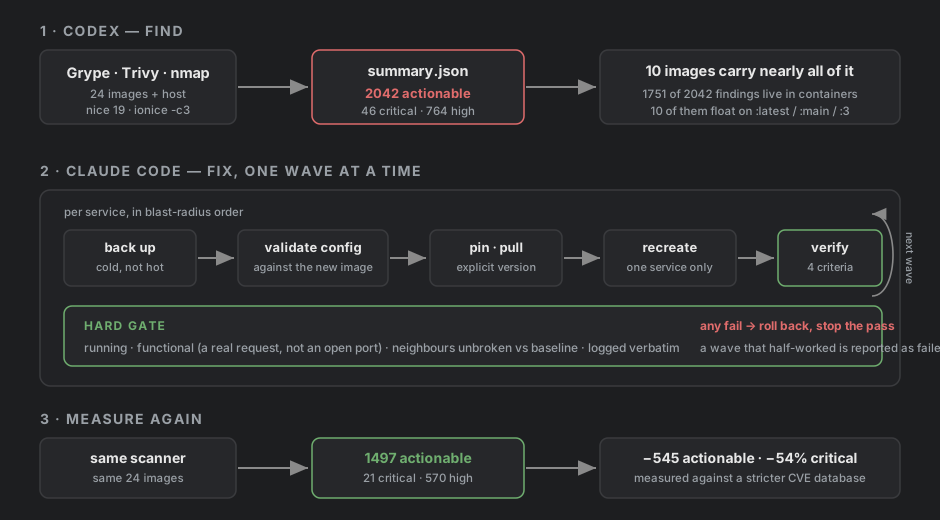
Pipeline diagram: Codex scans 24 images and finds 2042 actionable findings, Claude Code fixes them one wave at a time behind a hard validation gate, then the same scanner measures again at 1497

A Vulnerability Scan From Codex, a Container Upgrade From Claude Code

I run two coding agents against this lab. Codex found the problem and Claude Code fixed it, and keeping those two jobs in different hands turned out to be the most useful part of the whole exercise. The short version: a full vulnerability scan reported 2042 actionable findings — 46 critical, 764 high — and 1751 of them were in container images. Ten waves of updates later, the same scanner reports 1497 actionable, 21 critical, 570 high. ...

18 August 2026 · 10 min
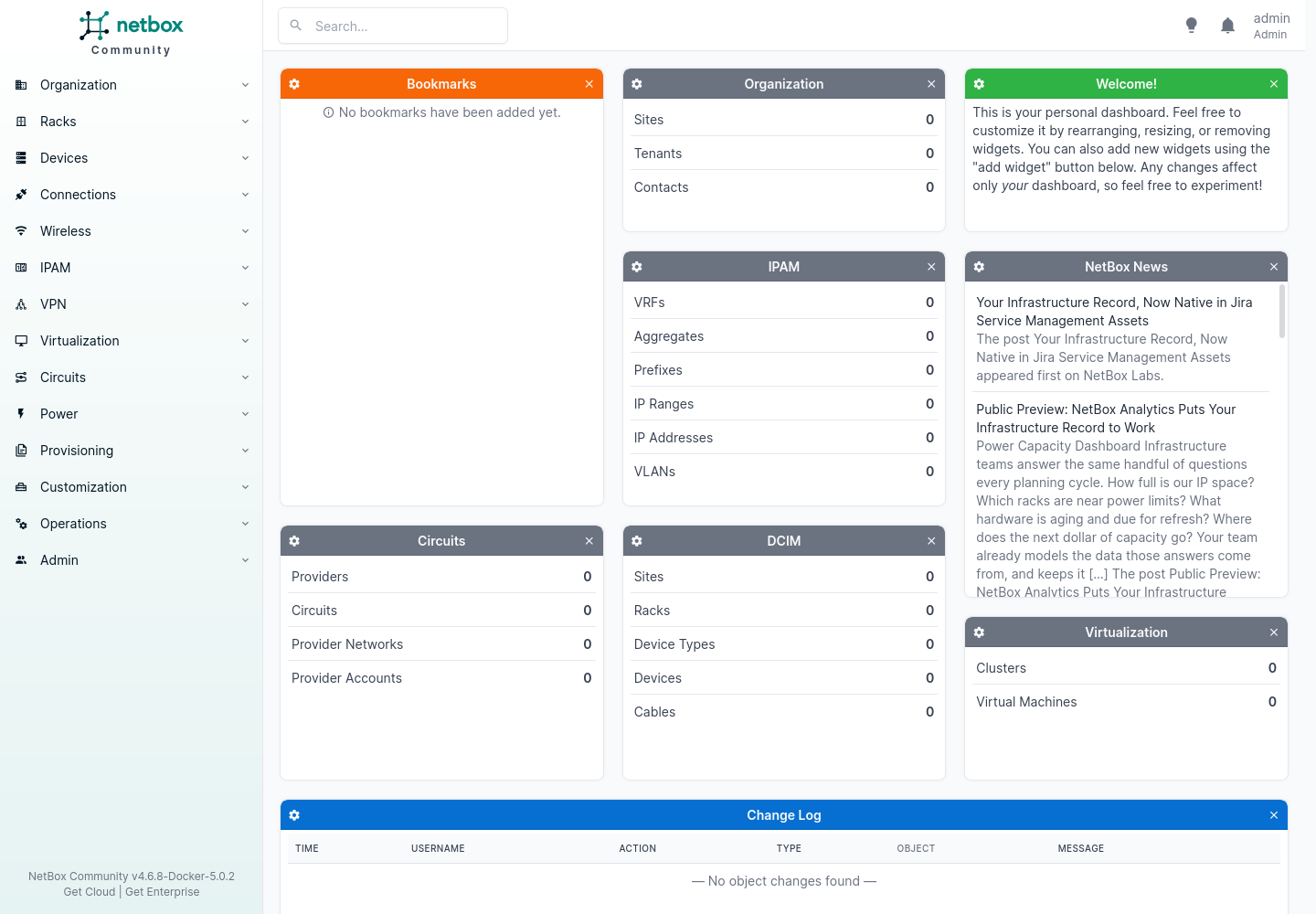
The NetBox dashboard on first launch, every object count sitting at zero

Trying NetBox in My Home Lab

I gave the lab VM more memory recently, which left room to try another service. NetBox was the one I wanted to test, because it does two jobs I currently do badly in scattered markdown: DCIM — sites, virtualization, and how infrastructure relates to itself. IPAM — prefixes, VLANs, address ranges, individual IP assignments. The trial was deliberately conservative. I wanted to find out whether NetBox suited the lab without handing it unnecessary exposure, and without letting an automated import invent facts I hadn’t verified. ...

14 August 2026 · 4 min
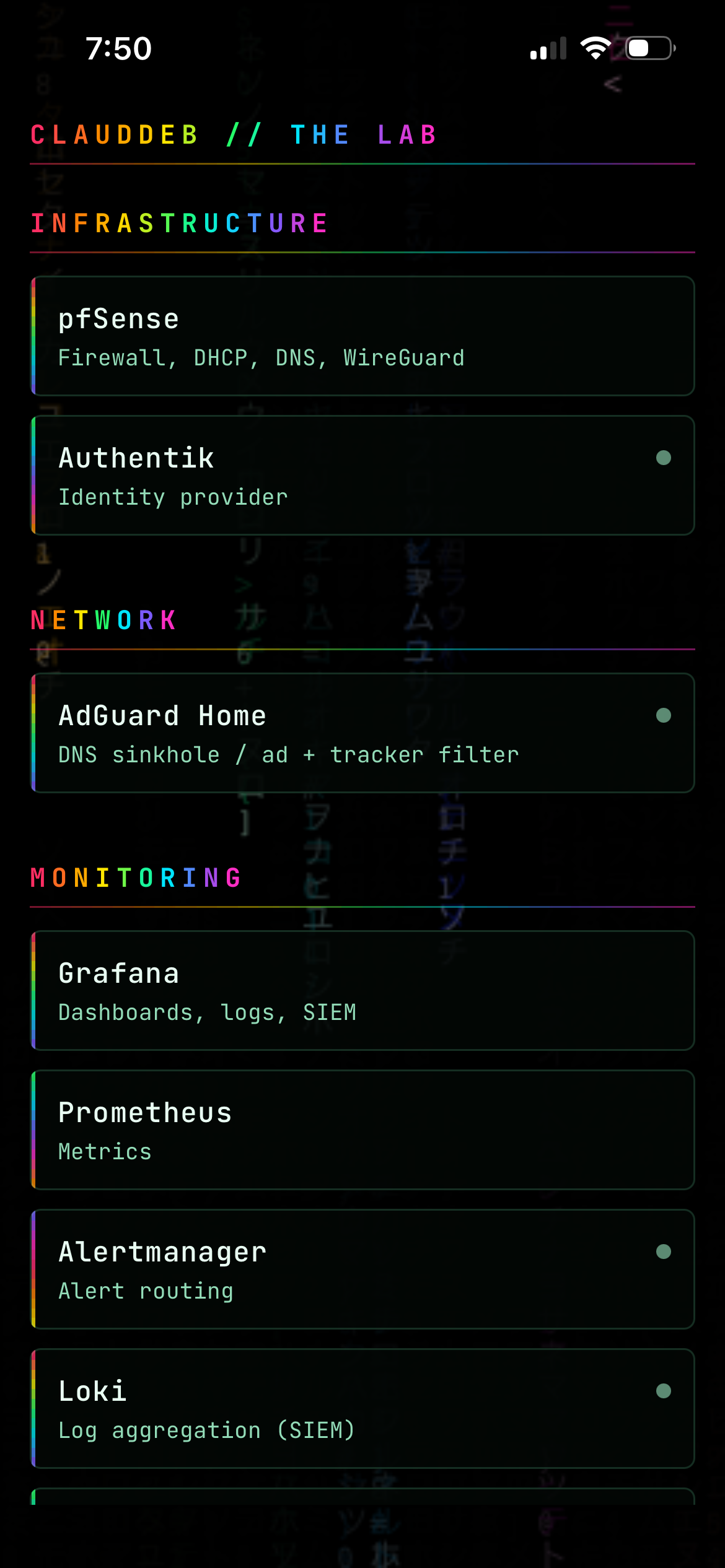
The LABDECK app on an iPhone, showing home lab service groups over an animated matrix rain background

LABDECK — Putting My Home Lab Dashboard on My Phone

A while back I built a front door for the home lab — one Homepage dashboard listing every service, with live status dots. It’s the page I look at most. On a phone it’s a browser tab. It works, but it’s a shrunk web page: no icon, no native controls, and every visit is a fresh Authentik redirect. I wanted the same thing as an actual app. This is how that went, including the parts that didn’t work. ...

9 August 2026 · 8 min
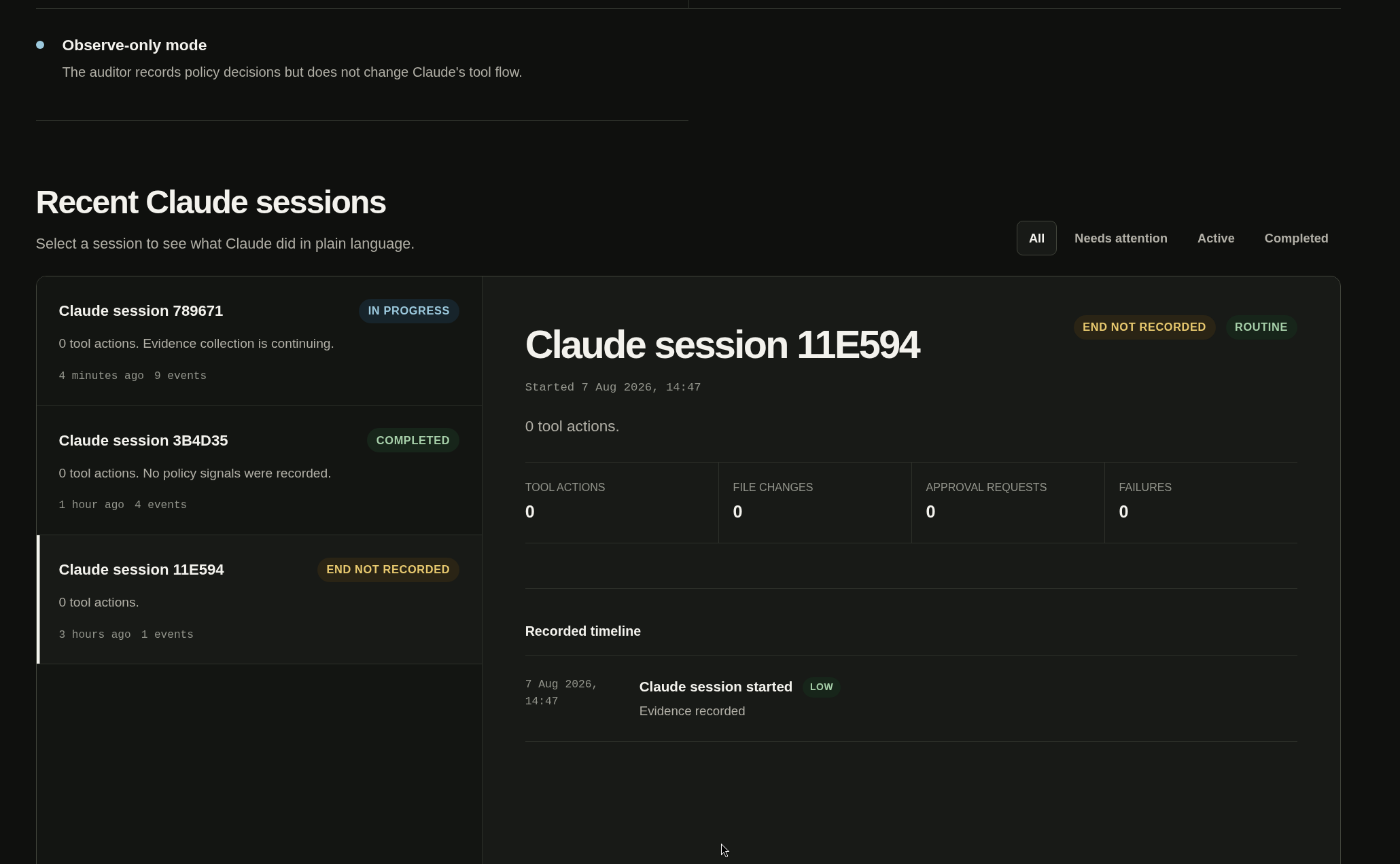
The agent auditor's local operator dashboard, showing observe-only mode and a list of recent Claude sessions with their recorded timelines

Auditing the AI Agent That Runs My Homelab

My homelab has picked up a lot of moving parts this year, and several of them are now LLMs. Claude Code runs natively on the box and does real work against real infrastructure — containers, reverse proxy config, monitoring, the lot. That’s genuinely useful. It also creates a trust problem I hadn’t had before. The problem is simple to state: the same agent that makes a change also writes the summary explaining why the change was safe. That’s convenient. It is not independent verification. If the agent quietly skips a validator and then reports “config validated”, I have no signal at all. The report is the evidence, and the thing that wrote the report is the thing being checked. ...

7 August 2026 · 9 min
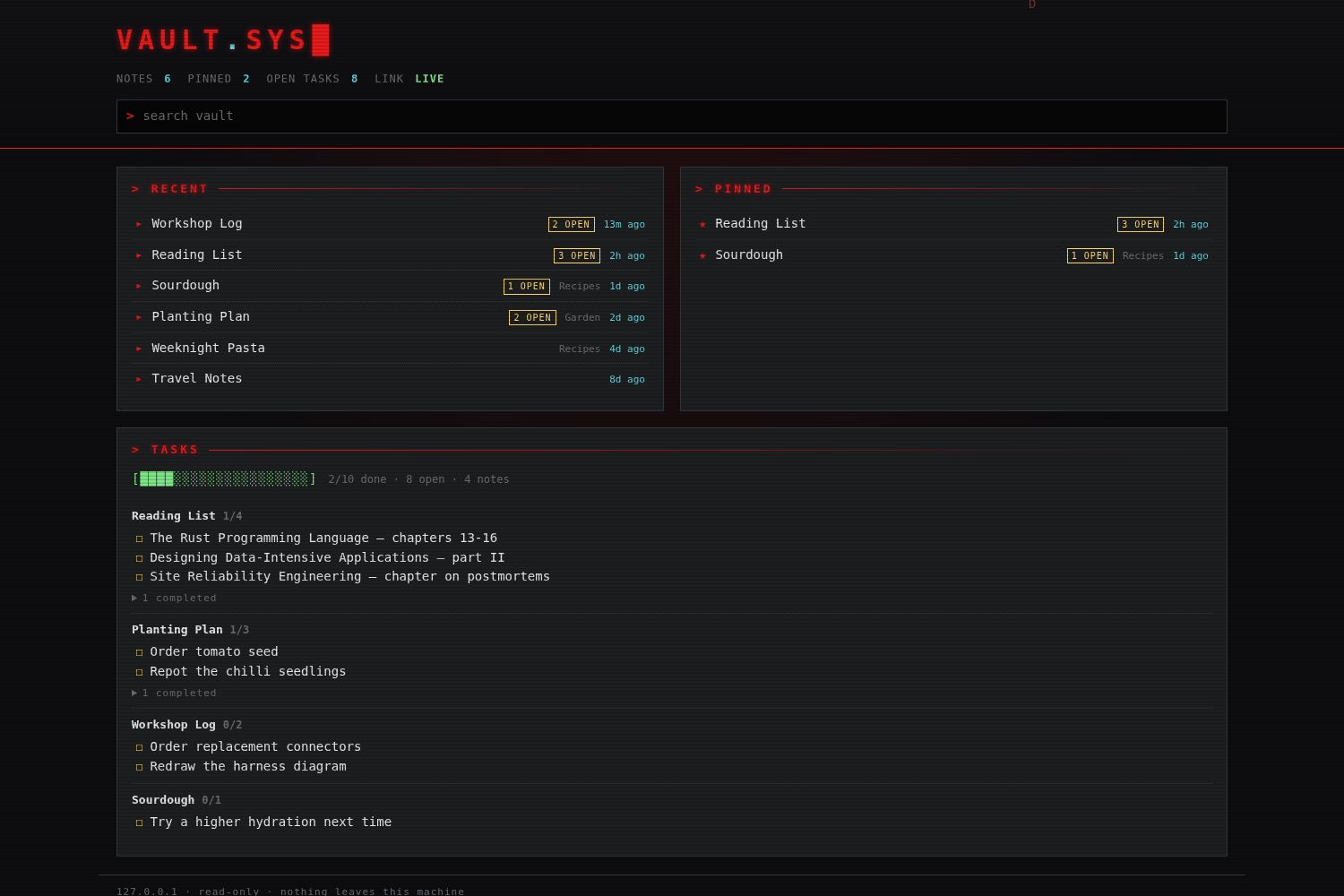
A dark red-on-black terminal-style dashboard showing RECENT, PINNED and TASKS panels over a set of markdown notes

A Read-Only Dashboard for My Obsidian Vault

My Obsidian vault has 61 notes in it — study notes, homelab runbooks, session logs — and it syncs between this box and my laptop. The only way to see what I’d touched recently was to open Obsidian and read Home.md, a hand-maintained index that goes stale the moment I forget to update it. So I wanted a small dashboard: recent notes, pinned notes, what’s still unticked. Local only. I didn’t write this code. I gave Claude Code the prompt and reviewed, tested and corrected what came back. That’s how most things on this blog get built now, and it seems worth being plain about. The prompt was: ...

3 August 2026 · 6 min