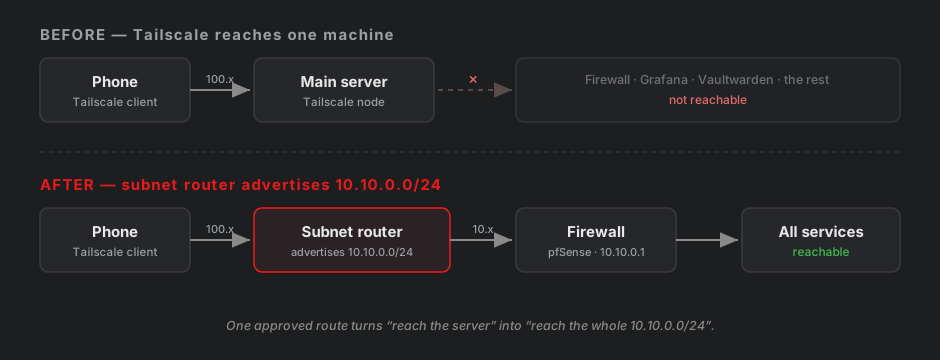
Before/after diagram: Tailscale reaching one machine, versus a subnet router advertising 10.10.0.0/24 so the phone reaches the whole lab

Two VPNs, One Phone: Consolidating Remote Access

I ended up with two VPNs into my homelab. WireGuard, running on my firewall, which I set up first. And Tailscale on my main server, which I added later so I could SSH in from a laptop without opening ports. Then I tried to use both from my phone and hit a wall. Phones only run one VPN at a time This isn’t a bug or a conflict between the two apps. iOS and Android both allow exactly one active VPN tunnel, full stop. It’s an OS-level restriction. ...
24 July 2026 · 10 min
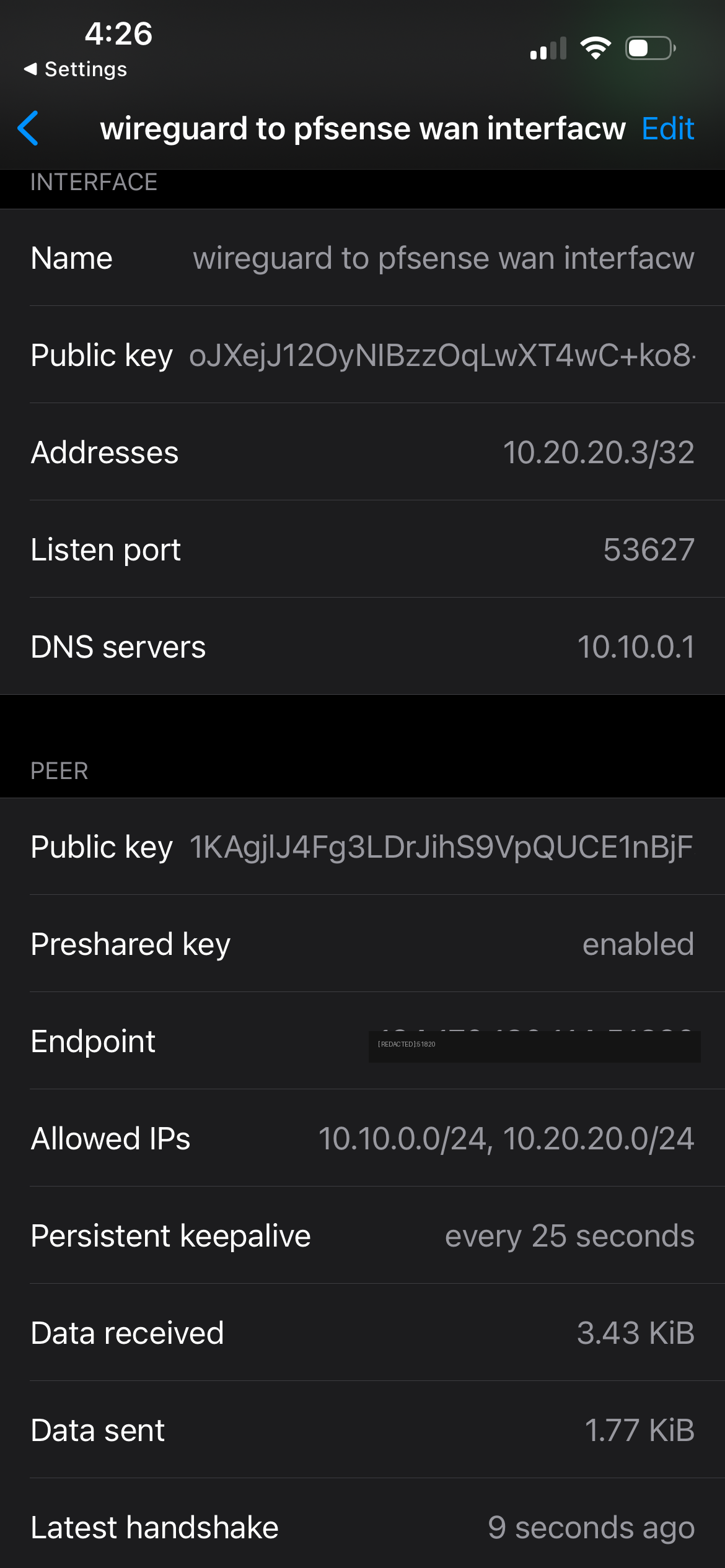
WireGuard handshake established over mobile data

Self-Hosted WireGuard Through a Nested Firewall — and the Four-Layer Debug to Make It Work

My lab is deliberately isolated — an automation VM (CLAUDDEB) sits behind a virtual pfSense firewall on a segment (10.10.0.0/24) that my home network can’t reach. That isolation is great until you’re out of the house and want to check your Grafana dashboards, which only listen inside that segment. I already use Tailscale for casual remote access, and I’ll be honest up front: for pure convenience, Tailscale wins — it punches through NAT automatically with zero firewall work. But this project wasn’t about convenience. It was about building the thing Tailscale is made of. Tailscale is WireGuard under the hood; hand-rolling raw WireGuard on pfSense teaches you how VPNs actually work — keys, peers, routing, firewall rules, NAT — at a level the managed tool deliberately hides. So I built it from scratch, kept Tailscale as my daily driver, and got a genuinely brutal debugging lesson in the process. ...

11 July 2026 · 7 min